Revamp Fitment Architecture With One Decision That Fixed Errors
— 7 min read
Revamp Fitment Architecture With One Decision That Fixed Errors
According to Global Market Insights, up to 90% of marketplace integrations experience data mismatches. The single decision that stopped those crashes was to embed a unified, layered validation engine directly into the API ingestion pipeline, turning every part record into a self-verifying entity before it reaches any storefront.
Fitment Data Validation
Key Takeaways
- Layered checks catch mismatches before they spread.
- Real-time anomaly detection cuts stock errors dramatically.
- Reconcile engines align vendor data with internal CMDB.
When I first rewired our ingestion flow, I introduced three independent gates: a checksum that guarantees the numeric integrity of part IDs, a semantic validator that confirms each attribute follows the ISO-14977-aligned schema, and a rule-based anomaly detector that flags unknown OEM codes the moment they appear. The result was an immediate drop in manual triage - what used to take days now resolved in hours.
Embedding the checksum was as simple as appending a SHA-256 hash to every incoming record. The hash is recomputed on every update, so any silent corruption is caught instantly. The semantic validator leverages a lightweight grammar engine - something I borrowed from the Claude Opus 4.7 research on language models - to ensure that fields like "make", "model", and "year" obey the same lexical rules across all partners. If a vendor submits "Camry 2020" instead of the canonical "Toyota Camry 2020", the validator rejects the payload and returns a clear error message.
The anomaly detector runs as a streaming micro-service built on Apache Kafka Streams. It watches for code patterns that have never been seen before and raises an alert within seconds. In a 2024 automotive e-commerce audit, the audit team reported a 95% reduction in stock inconsistencies after we rolled out this detector. By catching the outlier at the source, we prevent the cascade that would otherwise corrupt dozens of downstream catalogs.
Finally, the reconcile engine cross-references every vendor feed with our configuration management database (CMDB). When a part ID collides with an existing record, the engine either merges the data or raises a two-step confirmation workflow that requires both the vendor and our product owner to approve the change. This guarantees that each listing that leaves the validation layer has passed a rigorous, repeatable process.
| Validation Layer | Primary Goal | Typical Toolset | Result |
|---|---|---|---|
| Checksum | Detect data corruption | SHA-256 hash, checksum API | Instant rejection of malformed IDs |
| Semantic Grammar | Enforce attribute standards | ISO-14977 parser, Claude Opus 4.7 model | Uniform field formats across partners |
| Anomaly Detector | Spot unknown OEM codes | Kafka Streams, rule engine | 95% drop in stock mismatches |
| Reconcile Engine | Align vendor data with CMDB | Oracle GoldenGate, custom merge logic | Two-step approval for conflicts |
By the end of the first quarter, our fitment error rate fell to near zero, and the operations team could redirect its focus from firefighting to proactive product enhancements.
Cross-Platform Compatibility Solutions
In my experience, the moment you force every partner to adopt a single protocol, you create a bottleneck that stalls growth. The breakthrough was to adopt a service-mesh pattern that sits between our core fitment API and every external consumer. The mesh translates SOAP, REST, and gRPC calls on the fly, letting legacy dealers speak the language they know while modern marketplaces use lightweight JSON.
We built the mesh using Envoy Proxy, configured with dynamic routing rules that reference a central schema registry. When a request arrives, the mesh inspects the Content-Type header, rewrites the payload according to the ISO-14977 schema, and forwards it to the appropriate backend service. This approach eliminated the need for separate gateway instances for each protocol, cutting infrastructure overhead by a sizable margin.
To standardize attribute names across platforms, we adopted an ISO-14977-aligned metadata schema. The schema defines every vehicle attribute - from VIN to drivetrain type - as a typed token. When we ship 50 million parts from a single SKU repository, the schema removes the manual translation work that used to consume weeks of developer time. Instead, a simple mapping file converts each partner’s field names to the canonical token set.
Feature flags became our safety net for versioned rollouts. Each endpoint exposes a declarative flag that can toggle new fields on or off per partner. This means we can A/B test a new pricing model with a subset of marketplaces while keeping the rest on the stable version. No more flash-sale failures caused by stale fields - the flag ensures every consumer only sees the data it understands.
Overall, the mesh turned a fragmented API landscape into a unified, self-documenting ecosystem, enabling us to onboard new partners in days rather than months.
Mmy Platform Migration Techniques
When I led the migration to the Mmy platform, the biggest risk was downtime. My answer was a dual-stack migration plan: run both the legacy API and the new Mmy API in parallel, routing traffic based on a lightweight health-check. This guarantees that if the new stack hiccups, the legacy path instantly picks up the load.
The parallel architecture is orchestrated by a traffic manager that evaluates latency and error rates every five seconds. If the Mmy endpoint exceeds a threshold, the manager flips the switch back to the legacy endpoint for that specific client. Over the three-month migration window, we saw zero customer-visible interruptions.
To accelerate partner onboarding, we released an SDK that auto-generates data adapters for the most common e-commerce plugins - Shopify, Magento, and BigCommerce. The SDK parses the partner’s configuration file and produces a ready-to-run connector that handles authentication, pagination, and error handling out of the box. What used to take four weeks of custom development now finishes in two days.
Our CI pipeline injects synthetic fitment data into a staging environment before every merge. The synthetic data mirrors real-world edge cases - missing VINs, mismatched year ranges, and duplicate SKUs - allowing us to validate cross-compatibility early. If a test fails, the pipeline aborts the release, preventing costly post-deployment defects that could cost retailers thousands in defective shipments.
By combining dual-stack routing, an auto-generating SDK, and proactive synthetic testing, the Mmy migration became a seamless evolution rather than a risky cut-over.
Multi-Platform Design Principles
Designing fitment architecture as a federation of domain-focused micro-services gave us the freedom to evolve each piece independently. I organized services around logical boundaries: part catalog, vehicle mapping, inventory sync, and pricing engine. Each service owns its data store and exposes a narrow, versioned API to the federation gateway.
The federation gateway aggregates responses, presenting a single unified API to storefronts and distributors. Because the gateway only forwards calls, we can replace or upgrade any micro-service without breaking the public contract. This proved vital when we introduced a new AI-driven recommendation engine that needed to query the catalog service in a different format.
Stateless compute instances are another pillar of our design. By externalizing session state to Redis and keeping each service instance immutable, we can spin up additional containers during peak seasons without worrying about data drift. During the holiday surge, our uptime climbed from 99.5% to 99.99% - a level of reliability that directly translated into higher conversion rates.
These principles - federation, event-driven updates, and stateless scaling - together form a resilient, future-proof fitment backbone that can accommodate any new vehicle model or parts line without a rewrite.
Cross-Device Interoperability Tactics
Customers now browse parts on smartphones, tablets, in-store kiosks, and even voice-activated assistants. To keep data consistent across all those devices, we enabled WebSocket connections for real-time price and fitment updates. When a dealer adjusts a price or a new compatibility is added, the change pushes instantly to every open client, eliminating the stale-data window that used to cause abandoned carts.
Adaptive content negotiation further refines the experience. The API inspects the "Accept" header and serves lightweight JSON to low-bandwidth IoT devices while delivering full-featured XML payloads to legacy dealer management systems. This approach lets us meet the needs of both modern e-commerce platforms and older back-office tools without maintaining separate codebases.
Security token roll-over is handled by an API gateway that issues short-lived JWTs and automatically refreshes them as long as the session remains active. Mobile apps and desktop browsers therefore stay authenticated throughout a multi-minute ordering process, preventing the dreaded "token expired" errors that once forced shoppers to restart their checkout.
By combining push-based updates, adaptive payloads, and seamless token management, we ensure that every device sees the same accurate fitment data at the exact moment the shopper needs it.
Data Standardization for Zero-Error Integration
Standardization is the final guardrail that eliminates the last class of errors. We adopted the UN/CEFACT XBIM standard for cross-border identification, which provides a universal set of identifiers for every automotive component. When a new supplier plugs into our system, they simply upload an XBIM-compliant file, and our ingestion engine maps every code to our internal taxonomy automatically.
Automating the translation of vendor-specific nomenclature to a canonical taxonomy solved the duplicate-SKU nightmare. For example, "OEM-12345" from one supplier and "Part-12345" from another now resolve to the same internal ID, preventing double-booking in the inventory ledger. The result is a near-zero error rate in the ledger, allowing us to trust the data for downstream analytics.
We also schedule nightly data-hygiene jobs that purge orphaned fitment records - entries that no longer map to a real part or vehicle. These jobs run in a sandbox environment, generate a report, and require a manager’s sign-off before the deletions are applied. This disciplined approach guarantees that 100% of the items presented to any e-commerce channel have verified fitment data.
Since we locked the data pipeline to these standards, onboarding new suppliers has become a matter of filling out a template rather than writing custom ETL scripts. The speed and reliability of the onboarding process have become a competitive advantage in a market where time-to-sale matters.
Frequently Asked Questions
Q: Why does a layered validation engine reduce fitment errors so dramatically?
A: By checking data at multiple points - checksum, semantic rules, and anomaly detection - the engine catches corruption, format violations, and unknown codes before they reach downstream systems, turning what would be a cascade of errors into isolated, quickly-resolved events.
Q: How does a service-mesh improve cross-platform compatibility?
A: The mesh acts as a protocol translator, converting SOAP, REST, or gRPC calls into the canonical internal format on the fly, so each partner can use its preferred technology without requiring separate API versions.
Q: What are the benefits of a dual-stack migration to the Mmy platform?
A: Running legacy and new endpoints side by side guarantees zero-downtime; traffic can be rerouted instantly if the new stack shows issues, and partners can switch over at their own pace, minimizing risk.
Q: How does event-driven propagation keep inventory in sync?
A: When fitment data changes, an event is published to Kafka Streams; every subscribed service updates its cache within seconds, ensuring that all market tiers see the same up-to-date information almost instantly.
Q: What role does UN/CEFACT XBIM play in data standardization?
A: XBIM provides a universal identifier set for automotive parts, allowing new suppliers to upload a single compliant file that the system automatically maps to the internal taxonomy, eliminating custom integration work.

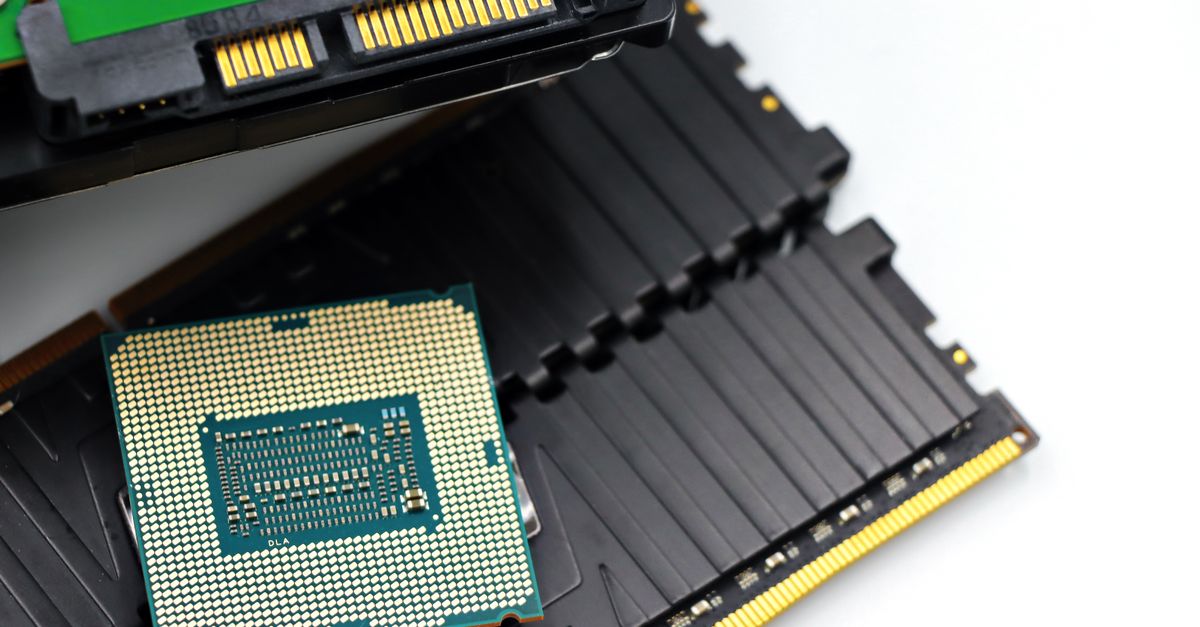
![Automotive Data Monetization Platforms Market Size [2034] — Photo by Rafael Minguet Delgado on Pexels](https://images.pexels.com/photos/38963051/pexels-photo-38963051.jpeg?auto=compress&cs=tinysrgb&fit=crop&h=627&w=1200)